|
 Known as The City of Roses, Portland lies at the junction of the Willamette and Columbia Rivers. Above the city, you can wander through fragrant paths of rose bushes at the Washington Park International Rose Test Garden (over 8,000 rose plantings). You can also visit the Peninsula Park and Rose Garden in northeast Portland (over 8,000 rose plantings) and Ladd's Addition in southeast Portland with 2,000 plus rose brushes. For all of you trivia fans, the City of Portland have never adopted the rose (or any other flower) as the official city flower. We do have an official bird (Blue Heron) , slogan (A City That Works), and a song. Known as The City of Roses, Portland lies at the junction of the Willamette and Columbia Rivers. Above the city, you can wander through fragrant paths of rose bushes at the Washington Park International Rose Test Garden (over 8,000 rose plantings). You can also visit the Peninsula Park and Rose Garden in northeast Portland (over 8,000 rose plantings) and Ladd's Addition in southeast Portland with 2,000 plus rose brushes. For all of you trivia fans, the City of Portland have never adopted the rose (or any other flower) as the official city flower. We do have an official bird (Blue Heron) , slogan (A City That Works), and a song.
Mt. Hood can be seen from the International Rose Test Garden, the Japanese Garden, and viewpoints throughout Forest Park, the 4,836 acre park running along the ridge of the west hills. The ledges below these parks are crammed with interesting houses reachable via steep sidewalks, connecting bridges and hidden stairways.
For interesting views of the city, check out the Cam sites and walk through one of the Portland bridges.
How Portland Got Its Name
 Besides being called the Rose City, Puddletown, and Stumptown (from its lumbering past), Portland is nicknamed Bridgetown for the unique bridges that unite east and west Portland. Occasionally the city closes the downtown bridges to motor traffic and gives free run of them to bikers, hikers and runners. Besides being called the Rose City, Puddletown, and Stumptown (from its lumbering past), Portland is nicknamed Bridgetown for the unique bridges that unite east and west Portland. Occasionally the city closes the downtown bridges to motor traffic and gives free run of them to bikers, hikers and runners.
Portland got its name from a coin toss in 1845. In 1843, two men by the name of Asa Lovejoy and William Overton filed a land claim for an area known as The Clearing. Overton soon sold his shares to Francis Pettygrove and the two of them couldn't agree on a name. To resolve the deadlock, they flipped a coin − now known as the Portland penny − to decide. Lovejoy, who was from Massachusetts, picked Boston. But Pettygrove won, and he chose Portland, the city in his native Maine.
Regarding Portland culture, "Mayberry on Mushrooms", was offered by Environmentalist, Steve Gunther in 2005. While Des Moines Register journalist Donald Kaul, as quoted by Jonathan Nicholas in The Oregonian on November 15, 1999, reported that “Portland is San Francisco run by Canadians.”
Cooking Light: Eat Smart, Be Fit, Live Well
In 2008, Cooking Light magazine wanted to know what places best fit their philosophy to eat smart, be fit, and live well. Using statistics from such organizations as the Centers for Disease Control and Prevention, the U.S. Department of Agriculture, and the Zagat Survey, they ranked major metropolitan areas on 15 criteria. They ranked Portland as the number two city (Seattle was first). We think their write-up of Portland sums up life here in the Rose City well.
Portland is called the City of Roses for its proliferation of brightly hued blooms, but the color that best describes this city is green. Portland prides itself on being environmentally friendly, boasting an award-winning public transportation system, 277 miles of bike paths, and city planning that minimizes sprawl.
The soft seasonal drizzle that falls over the city (actually, there's more annual rainfall in Atlanta) makes it literally green as well. Consequently, Portlanders enjoy 227 parks and 146 miles of lushly forested hiking trails, rain or shine. The climate also nurtures the fabulous food and wine produced here, helping make Portland fourth in the nation in per capita farmers' markets and top for its number of organic restaurants.
Portland earned the second spot on our top 20 list of Cooking Light cities because it also ranked highly in the following categories: acres of parkland per capita; percent of population that reports to be in good or better health; percent of population that exercised in the last month; and its walkability.
Parks and Green Spaces
 If you love the outdoors, Portland is your kind of place. There are parks (10,763 acres which represents 11% of the city's area), trails and green spaces scattered throughout the city − it's perfect for a pleasant hike, a picnic or a pickup football game. Area waterways welcome those who enjoy rafting, canoeing, kayaking, rowing, boating, and fly fishing. And if there's not enough to keep you occupied in the city itself, you won't have to travel far to find more gorgeous scenery and outdoor pursuits. One of the best ways to see Portland is joining up with the Portland Walking Tours. If you love the outdoors, Portland is your kind of place. There are parks (10,763 acres which represents 11% of the city's area), trails and green spaces scattered throughout the city − it's perfect for a pleasant hike, a picnic or a pickup football game. Area waterways welcome those who enjoy rafting, canoeing, kayaking, rowing, boating, and fly fishing. And if there's not enough to keep you occupied in the city itself, you won't have to travel far to find more gorgeous scenery and outdoor pursuits. One of the best ways to see Portland is joining up with the Portland Walking Tours.
Portlanders have always felt blessed by the wealth of nature; they assume and expect unimpeded access to the outdoors for both resource production and recreation. Evidence of our love for parks is that park bond issues usually pass with ease. The Vera Katz Eastbank Esplanade has become influential among park planners, with talks of floating walkways achieving buoyancy in planning sessions around the country.
Portland receives high marks for the city’s use of volunteers in its parks according to Peter Harnik, the Director of the Center for City Park Excellence. In an interview in the Portland Tribune in July 2006, Harnik said. “But so many people in Portland are environmentally oriented and want to help, and the parks departments gives them a way of doing that.”
Overall, the Portland park scene rates high according to the Center for City Park Excellence. Other information from the site:
-
Portland ranks second in its class for the number of park district soccer fields per capita, ninth for playgrounds per capita, and right in the middle of a large pack with its six golf courses.
-
Portland ranks second to last among the 17 cities in its population-density class for baseball diamonds per capita.
-
Forest Park is the 14th largest city park, number ten if the list is restricted to municipally owned parks (as opposed to state, county and national parks within city boundaries).
In 2007, 6.2 million visits were logged at recreation sites. Other facts from the Portland Parks & Recreation:
-
66% of the acreage is dedicated to natural areas for the preservation and protection of streams, native plants, and wildlife.
-
3,000 people grown their own fresh food in 31 community gardens.
-
Portland's tree canopy currently covers 26% of the city.
-
trees in parks number roughly 1.2 million and public street trees are estimated at 236,000 with combined total of public trees accounting for 47% of Portland's tree canopy.
Wildlife in Portland
At least 209 bird species have been sighted across the Metro region according to the Audubon 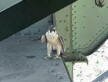 Society of Portland. Residents of Portland do not have to go far to experience a whole array of birds of prey. Visitors can watch Bald Eagles nesting on Ross Island, state-listed Peregrine Falcons nesting on Portland bridges, and Osprey nesting throughout the Portland harbor. Sharp-shinned and Coopers Hawks regularly hunt songbirds at backyard feeders. The trilling of Screen Owls fills the night at parks throughout the city, and some of our more wooded parks also provide homes for Great Horned, Pygmy, and Barred owls. Society of Portland. Residents of Portland do not have to go far to experience a whole array of birds of prey. Visitors can watch Bald Eagles nesting on Ross Island, state-listed Peregrine Falcons nesting on Portland bridges, and Osprey nesting throughout the Portland harbor. Sharp-shinned and Coopers Hawks regularly hunt songbirds at backyard feeders. The trilling of Screen Owls fills the night at parks throughout the city, and some of our more wooded parks also provide homes for Great Horned, Pygmy, and Barred owls.
For information and updates on Metro's Regional Fish and Wildlife Plan, urban conservation issues in the Portland metro region, and much more visit Urban Fauna.
Portland and Trees
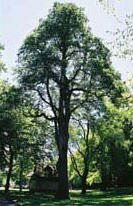 Portland is a tree hugging town. We have thousands of trees in the city and organizations like the Friends of Trees continue planting more. There is a city agency, Portland Parks Urban Forestry, that is responsible for the protection of trees. Portland is a tree hugging town. We have thousands of trees in the city and organizations like the Friends of Trees continue planting more. There is a city agency, Portland Parks Urban Forestry, that is responsible for the protection of trees.
About 26 percent of Portland is covered by tree leaves, branches and trunks, when viewed from above. San Antonio boasts 38 percent coverage and Atlanta nearly 37 percent, according to separate analyses by conservation group American Forests and the U.S. Department of Agriculture in a 2010 report. Portland hopes to finish a citywide tree proposal that will increase canopy coverage as well as streamline tree policies. The canopy goal for Portland is 33 percent citywide, and higher for residential neighborhoods. Portland has plenty of ornamental trees, like the cherry and plum whose blossoms are wonderful in the spring. What we're not planting, however, are evergreens, Oregon white oak, northern red oaks and nut trees that can be costly to maintain but provide multi-fold environmental benefits.
Portland also has a Heritage Tree ordinance that became part of the Portland City code in 1993, and the first Heritage Trees were designated in 1994. This ordinance calls for the City Forester to annually prepare a list of trees that because of their age, size, type, historical association or horticultural value are of special importance to the City. Upon recommendation of the Urban Forestry Commission, the City Council may designate a tree as a Heritage Tree provided the tree's health, aerial space, and open ground area for the root system have been certified as sufficient. As of 2006, there were 283 Heritage Trees in Portland.
If you want to incur the wrath of your neighbors, just cut down a tree in your yard. But you may also make long-lasting friends if it opens up a view for your neighbors. Permits are required to cut or remove all trees over 12 inches in diameter on all properties in the city of Portland prior to the issuance of a building permit. Exceptions include single-family residential properties that cannot be further developed and include an existing single-family home used exclusively as a single-family residence. Here is the link to the city's Tree Cutting Ordinance.
Walking in Portland
Under Oregon law (ORS 801.220), a crosswalk exists at all public street intersections, whether marked with paint, or unmarked. However, all crosswalks between intersections (mid-block) must be marked with white painted lines. Here is a link to a more complete definition. Under Oregon law (ORS 811.360), drivers must stop and remain stopped for pedestrians in crosswalks until they have cleared the driver's lane and the adjacent lane. When a vehicle is turning, drivers must stop and remain stopped for pedestrians until they have cleared the lane into which the driver is turning, plus at least six feet of the adjacent lane if it is an intersection with a signal, or the entire adjacent lane where there is no signal.
The Willamette Pedestrian Coalition is a non-profit community-based membership organization in the greater Portland, Oregon area dedicated to promoting walking and making the conditions for walking safe and attractive.
Downtown Portland
Lying on a gentle, mile-wide slope between a river and a range of hills, downtown Portland is alive and well. Whereas most cities roll up the streets after the work force completes their work day, Portland just keeps rolling. Restaurants thrive. Shopping goes on well into the evening. People are hurrying off to the concert hall, theatres, art galleries, and museums. Parking usually requires finding a garage instead of parking on the street. Of course, lots of folks arrive and depart on MAX, the light rail system.
Most downtown Portland blocks are 200-300 feet in length which is much shorter than most cities in the USA. The short blocks do two important things: it allows more light to infiltrate and it makes for a walker's paradise. The downtown traffic lights are set at a leisurely 12 miles per hour which means bikers can navigate through the streets easily.
One thing we notice immediately upon arriving in Portland is that people "get out and do things." You can always find bikers, runners, and walkers in most neighborhoods early in the morning till dark. Whereas all we remember from living in eastern cities is listening to the hum of air conditioners during the summers while on walks, Portlanders are out and about all times of the year. Yes, even in the rain. Nike's message about Just Do It is sure applicable in the Rose City.
Powell's City of Book has an excellent walking map of downtown Portland. Download it here.
Benson Bubblers
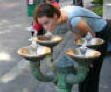 Walking in downtown Portland, one of the first items you'll notice is the four-bowl fountains throughout the city. Simon Benson, a Norwegian immigrant, a lumber baron and philanthropist is the person responsible for these drinking fountains. The story goes that while walking through his mill one day, Benson noticed the smell of alcohol on his workers' breath. When Benson asked these men why they drank in the middle of the day, they replied there was no fresh drinking water to be found downtown. Upon hearing this, Benson proceeded to commission 20 elegant freshwater drinking fountains, now known as the Benson Bubblers. Beer consumption in the city reportedly decreased 25 percent after the fountains were installed. Drinking fountains, including the Benson Bubblers, run up an annual tab of about $400,000 for maintenance and sewer fees. Walking in downtown Portland, one of the first items you'll notice is the four-bowl fountains throughout the city. Simon Benson, a Norwegian immigrant, a lumber baron and philanthropist is the person responsible for these drinking fountains. The story goes that while walking through his mill one day, Benson noticed the smell of alcohol on his workers' breath. When Benson asked these men why they drank in the middle of the day, they replied there was no fresh drinking water to be found downtown. Upon hearing this, Benson proceeded to commission 20 elegant freshwater drinking fountains, now known as the Benson Bubblers. Beer consumption in the city reportedly decreased 25 percent after the fountains were installed. Drinking fountains, including the Benson Bubblers, run up an annual tab of about $400,000 for maintenance and sewer fees.
Simon Benson had Portland architect A. E. Ddoyle design the bubblers and gave $10,000 in 1912 to fabricate and install the bubblers. The first Benson Bubbler remains at SW Fifth Avenue and SW Washington Street. The city now has some 60 Benson Bubblers on Portland's downtown streets. To determine if the Bubbler is an original one, look for the inscription: "Presented by S. Benson, 1912."
Horse Rings
 In late 2005, Portland artist Scott Wayne Indiana tied his first miniature plastic horse to an iron ring embedded in a sidewalk. He's tethered perhaps 100 more since, and Portlanders Kim Upham and Laura Kemp have continued and amplified his efforts at horse projectt. The ponies are a nod to Portland history, and a way to get people to pay attention to their surroundings. The horse rings were put in years ago and when you came downtown, you tied your horse up to the ring and basically it was your parking meter so to speak. In late 2005, Portland artist Scott Wayne Indiana tied his first miniature plastic horse to an iron ring embedded in a sidewalk. He's tethered perhaps 100 more since, and Portlanders Kim Upham and Laura Kemp have continued and amplified his efforts at horse projectt. The ponies are a nod to Portland history, and a way to get people to pay attention to their surroundings. The horse rings were put in years ago and when you came downtown, you tied your horse up to the ring and basically it was your parking meter so to speak.
Dealing with Panhandlers
There are street people and panhandlers in Portland's parks and squares, and occasionally they are threatening. Are these panhandlers lonely victims of an uncaring world or organized hucksters milking sympathy from gullible citizens? I don't know but here's a solution. Many Portlanders prefer not to give panhandlers money. Rather, they carry Sisters of the Road meal coupons with them and hand them out instead of money. Meals at Sisters of the Road offer a choice of at least two hot and nutritious entrees and always a vegetarian option. Sisters is located in the Old Town part of downtown area so it is very accessible to street people. Each meal coupon costs $2.00 and can be purchased either singly, or in unlimited numbers, and then given to hungry people for them to use to buy a meal and a drink in Sisters. You can purchase the coupons online or at a number of different food co-ops.
You will notice individuals selling a newspaper called Street Roots at locations throughout Portland − usually at the entrance/exits of food stores where there is a considerable amount of foot traffic. Street Roots is a nonprofit, grassroots newspaper that assists people experiencing homelessness and poverty by creating flexible income opportunities. The tabloid is published every two weeks and costs $1. The homeless person selling the paper keeps about 60 cents from the sale.
Two City Symbols
 Both officially and unofficially, the city uses two very different emblems to epitomize its character as a community. One is the blue heron, adopted as an official city symbol in 1986. This graceful bird that thrives in the riverside marshes winding through the metropolis seemed a natural mascot to former Mayor Bud Clark, who enjoyed early morning canoe trips along the Willamette River. Both officially and unofficially, the city uses two very different emblems to epitomize its character as a community. One is the blue heron, adopted as an official city symbol in 1986. This graceful bird that thrives in the riverside marshes winding through the metropolis seemed a natural mascot to former Mayor Bud Clark, who enjoyed early morning canoe trips along the Willamette River.
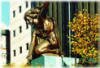 The other is a huge hammered copper statue of "Portlandia" reaching down from the postmodern city office building called The Portland at 1120 SW 5th Avenue. The figure represents civic life and commerce. Portlandia is based on a figure in Portland's city seal of a woman, dressed in classical clothes, who welcomes traders into the port of the city. The sculpture is placed on the a landing on the third floor of the Portland Building. The sculpture is 36 feet tall but if Portlandia was magically to stand up, she would be over 50 feet tall. Portlandia is the second largest hammered copper statue in America (the largest is the Statue of Liberty). The Portland is a citywide and national icon and was designed by architect Michael Graves. The design of the building has been criticized by many architects throughout Portland and the world. The other is a huge hammered copper statue of "Portlandia" reaching down from the postmodern city office building called The Portland at 1120 SW 5th Avenue. The figure represents civic life and commerce. Portlandia is based on a figure in Portland's city seal of a woman, dressed in classical clothes, who welcomes traders into the port of the city. The sculpture is placed on the a landing on the third floor of the Portland Building. The sculpture is 36 feet tall but if Portlandia was magically to stand up, she would be over 50 feet tall. Portlandia is the second largest hammered copper statue in America (the largest is the Statue of Liberty). The Portland is a citywide and national icon and was designed by architect Michael Graves. The design of the building has been criticized by many architects throughout Portland and the world.
How the City Delivers its Services to Residents
Crime and the fear of crime continue to drop in Portland. Residents give high ratings to the livability of their neighborhoods and the city. More businesses see the city as a good place to do business. Those are the good things in the city auditor's report released in late 2008 on how the city delivers its services to residents.
But here are some of what the report calls "challenges": Emergency response times for both police and fire calls continue to be slower than city goals. The share of homeowners who spend more than half of their income on housing reached a new high. Homelessness is on the rise. Sewer bills outpace comparable cities.
The report examines trends and the results of city surveys regarding 20 city bureaus and the Portland Development Commission for the fiscal year that ended in June 2008. You can read the entire report at the City of Portland Web site by clicking here.
Metro Government
You can't discuss Portland without mentioning the Metro Council and one of its most important function, the Urban Growth Boundary. Metro is the directly elected regional government that serves more than 1.3 million residents in Clackamas, Multnomah and Washington counties, and the 24 cities in the Portland, Oregon, metropolitan area. Metro provides transportation and land-use planning services and oversees regional garbage disposal and recycling waste reductions programs. Metro manages regional parks and green spaces and the Oregon Zoo. It also oversees operation of the Oregon Convention Center, Civic Stadium, the Portland Center for the Performing Arts and the Expo Center, all managed by the Metropolitan Exposition-Recreation Commission.
The City of Portland and the State of Oregon are both recognized nationally for their land use planning policies and efforts to curb urban sprawl. The state Land Use Planning Act of 1973 requires local governments to develop plans, make land use decisions consistent with the plans, and coordinate with other local governments and state agencies. Metro, the only elected regional government in the United States, helps ensure compatible land use and transportation plans throughout the Greater Portland metropolitan area. Urban growth boundaries (UGB) were created as part of the statewide land-use planning program in Oregon in the early 1970s. The boundaries mark the separation between rural and urban land. They are intended to encompass an adequate supply of buildable land that can be efficiently provided with urban services (such as roads, sewers, water lines and street lights) to accommodate the expected growth during a 20-year period. The idea is that by providing land for urban uses within the boundary, rural lands can be protected from urban sprawl..
Metro manages the regional urban growth boundary for the Portland metropolitan area. Adopted in 1979, the Metro UGB is approximately 369 square miles (about 236,000 acres). It includes 24 cities and the urban portions of Washington, Multnomah and Clackamas counties. As of February 2000, about 1.3 million people live within the UGB. For a view of the UGB map (PDF file).
Portland Public Transportation: Light Rail and Streetcars
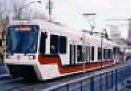 MAX (Metropolitan Area Express), the area 38-mile light rail system, is an advanced and modern system that carries an average of 83,800 daily boarding and 27.5 million rides annually (calendar year 2004). The line runs east/west - from the town of Gresham to the town of Hillsboro with numerous connections in the downtown area. Airport MAX (opened September 2001) links the existing east/west line with the Portland International Airport. Interstate MAX opened in September 2004 and the Yellow Line travels south from Expo Center Station, located on North Marine Drive at the Expo Center into the downtown area. The Green line will open in late 2009 and will add 6.5 miles between Gateway Transit Center and Clackamas Town Center. MAX (Metropolitan Area Express), the area 38-mile light rail system, is an advanced and modern system that carries an average of 83,800 daily boarding and 27.5 million rides annually (calendar year 2004). The line runs east/west - from the town of Gresham to the town of Hillsboro with numerous connections in the downtown area. Airport MAX (opened September 2001) links the existing east/west line with the Portland International Airport. Interstate MAX opened in September 2004 and the Yellow Line travels south from Expo Center Station, located on North Marine Drive at the Expo Center into the downtown area. The Green line will open in late 2009 and will add 6.5 miles between Gateway Transit Center and Clackamas Town Center.
Portland Mall Revitalization Project The project will add light rail tracks to the Portland Transit Mall on both Fifth and Sixth Avenues between Portland State University and Union Station (Amtrak). The project was born of the need to relieve congestion on the existing downtown Portland MAX alignment on Yamhill and Morrison Streets. This project was originally conceived as part of a north-south light rail project between Vancouver, Washington and Clackamas. Upon opening, scheduled for 2009, both MAX Yellow Line and the Green Line will run on these tracks.
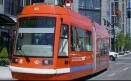 Portland's streetcar line is a "circulator" - a public transit system that carries people through downtown neighborhoods, quickly and reliably. The Portland Streetcar is designed to fit the scale and traffic patterns of the neighborhoods through which it travels. Streetcar vehicles, manufactured by Skoda-Inekon in Plzen of the Czech Republic, are about 8 feet wide and approximately 66 feet long, about 10 inches narrower and 1/3 the length of a MAX (TriMet’s light rail system) double car train. Portland Streetcar began operations July 20, 2001 as the first modern streetcar system in the country. In 2009 the city broke ground on the Loop alignment which will connect downtown Portland to the Rose Quarter, Lloyd District, Convention Center, Central Eastside and the Oregon Museum of Science and Industry. The car on this new line will be built in Oregon. Portland's streetcar line is a "circulator" - a public transit system that carries people through downtown neighborhoods, quickly and reliably. The Portland Streetcar is designed to fit the scale and traffic patterns of the neighborhoods through which it travels. Streetcar vehicles, manufactured by Skoda-Inekon in Plzen of the Czech Republic, are about 8 feet wide and approximately 66 feet long, about 10 inches narrower and 1/3 the length of a MAX (TriMet’s light rail system) double car train. Portland Streetcar began operations July 20, 2001 as the first modern streetcar system in the country. In 2009 the city broke ground on the Loop alignment which will connect downtown Portland to the Rose Quarter, Lloyd District, Convention Center, Central Eastside and the Oregon Museum of Science and Industry. The car on this new line will be built in Oregon.
The Portland Streetcar is owned and operated by the City of Portland in partnership with TriMet, which contributes a portion of operating funding. Portland Streetcar is managed by the Portland Office of Transportation. The City of Portland contracts with Portland Streetcar, Inc. to construct and operate the Streetcar system. Portland Streetcar, Inc. is a private non-profit corporation.
You can bring your bike with you on all buses, MAX trains, and the Portland streetcar line. For detailed description of the Portland metro transportation system, visit public transportation systemem.
The Lion and Rose Bed and Breakfast Inn in the Northeast neighborhood of Irvington has an excellent video on "Getting Around in Central Portland." Click here to view it.
Parking SmartMeters
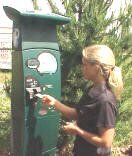 In early 2002, the Portland City Council approved a contract to supply pay station technology for on-street parking in Portland. The City has now replaced the majority of its single-space meters in the downtown central business district with SmartMeters. As of March 2005, the city has 1,056 of these machine installed. In early 2002, the Portland City Council approved a contract to supply pay station technology for on-street parking in Portland. The City has now replaced the majority of its single-space meters in the downtown central business district with SmartMeters. As of March 2005, the city has 1,056 of these machine installed.
SmartMeters are solar-powered, multi-space parking meters with the ability to accept SmartMeter Parking cards, money, as well as credit or debit cards. After inserting your card or money into the machine, you determine how many minutes you desire to park (25 cents for 15 minutes). You then receive a printed receipt which you stick on the curb-side window of your vehicle.
Portlanders have a nickname for these tall machines: Gumby. They make the city a small fortune since any unused time cannot be used by others. It also means lower meter maintenance since one machine can take care of 10-20 parking spaces. In February 2005, the city recorded 430,000 uses and 215,675 credit card transactions in the downtown area. At a mere 50 cents a transaction, that figures out to be about $215,000. It is most likely closer to $400,000 a month. A Gumby costs the city $6,100 each and they hold 1,500 receipts inside when fully loaded.
Pioneer Courthouse Square: Portland's Living Room
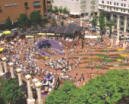 On April 6, 1984, the citizens of Portland inaugurated what has become one of the most successful public spaces in America. Located in the heart of downtown Portland, Pioneer Courthouse Square, a thriving urban park, is affectionately known as the City's "living room." More than 21,000 people pass by the Square each day, while thousands more utilize its on-site resources. Upwards of 300 events take place in the Square each year. On April 6, 1984, the citizens of Portland inaugurated what has become one of the most successful public spaces in America. Located in the heart of downtown Portland, Pioneer Courthouse Square, a thriving urban park, is affectionately known as the City's "living room." More than 21,000 people pass by the Square each day, while thousands more utilize its on-site resources. Upwards of 300 events take place in the Square each year.
The Square's features include the Waterfall Fountain, built of granite; sixteen columns with classical pillars topped with carved yellow roses on which crawl pink-and-green spotted bugs; and two brick amphitheaters which provide seats for events. Other pieces of artwork include Tom Hardy's sculpture of three racing horses and J. Seward Johnson's Allow Me, a bronze statue of a man with an umbrella and an upraised arm.
When the Square was born, the 501(c)(3) non-profit organization, Pioneer Courthouse Square, Inc., was created to manage this City Park and is governed by a Board of Trustees.
We Love our Liquids
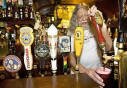 It must be the rain that drives us to drink. Portlanders have the highest per capita consumption of gourmet coffee bean in the U.S. according to the New York Times. We also have the second largest number of vineyards in the nation and about 50 wineries within 100 miles of Portland. Oregon is noted for two wines: Pinot Noir and Pinot Gris. Portland has 40 breweries within city limits — the most of any city in the world. It must be the rain that drives us to drink. Portlanders have the highest per capita consumption of gourmet coffee bean in the U.S. according to the New York Times. We also have the second largest number of vineyards in the nation and about 50 wineries within 100 miles of Portland. Oregon is noted for two wines: Pinot Noir and Pinot Gris. Portland has 40 breweries within city limits — the most of any city in the world.
Benjamin Franklin once said, "Beer is proof that God loves us and wants us to be happy." Here in the Northwest's beer mecca you'll hardly find argument with that notion. Portland have more microbreweries per capita than any other city. With over 40 breweries operating within city limits, a good way to see them is hop on the Brewvana bus. The all inclusive tour is your chance to visit multiple breweries, taste lots of fresh and unique beers, tour the brewing facilities, pair beer with food, meet the brewers and the visit the establishments that produce the liquid that we love.
Walk into a typical pub anywhere in the country and they brag about having a dozen or so brews on tap. In Portland, that won't cut it. For example, Horse Brass Pub in Southeast Portland has over 50 micro-brews on tap. Portland has a couple of nicknames, "Beervana" and "Brewtopia," to mark its thriving microbrewery industry.
Today, Oregonians are once again leading the newest trend in booze as products from 20 or so small-batch distilleries gain national attention and recognition. According to Bill Owens, founder and president of the American Distilling Institute, about 100 microdistillers are operating in the U.S. Twenty of those are in Oregon. Oregon Distillers Guild − the first such in the country − is strong evidence that the state is becoming a leader in artisan spirits, too. The guild, comprising 16 Oregon craft distillers, operates as a nonprofit corporation to promote the common interests of the state's licensed distilling businesses. While most of Oregon's microdistilleries have only been in operation for a few years, Steve McCarthy of Clear Creek Distillery has been in the game for more than two decades.
The Arts
More Oregon adults attend opera, jazz and classical music concerts, per capita, than in any other state. A geographical analysis of a survey released in late 2009 by the National Endowment for the Arts also showed Oregon was second in overall per-capita attendance at performing arts events.
The survey also revealed that Oregon ranked number one in the percentage of adults attending art museums and craft festivals. The survey took place in May 2008, before the economic squeeze, but, following decades of scraping the bottom of the national funding barrel, the news came as a pleasant surprise.
Whether it music, dance, stage, film, or art, you will find it in Portland. Online event calendars are maintained by the Portland Visitors Association and the Regional Arts and Culture Council.
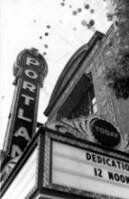 The Portland Center for the Performing Arts dominates the performing arts scene in Portland. PCPA consists of four theaters in three separate buildings. The facility is the fifth largest venue in the nation and entertains over one million people each year at over 900 events. The Portland Center for the Performing Arts dominates the performing arts scene in Portland. PCPA consists of four theaters in three separate buildings. The facility is the fifth largest venue in the nation and entertains over one million people each year at over 900 events.
-
Keller Auditorium (formerly the Civic Auditorium) located at SW Third Avenue between Market and Clay
-
Arlene Schnitzer Concert Hall at SW Broadway at Main
-
The New Theatre Building, containing the Dolores Winningstad Theatre and the Newmark Theatre at SW Broadway at Main
Visit our Film, Music and Stage page for details on the Portland arts scene.
Professional Sports in Portland
Sport fans who prefer to participate will find options in Portland for just about every sport they enjoy. With only one nationally prominent professional team − Portland Trail Blazers − sports boosters agree that it not a big sports town for viewing sports events.
But Portland has loyal Blazers fans which are noted for their energy. For example, the Lakers have not won at Portland since February 2005. After a game in Portland, Lake Coach Phil Jackson said: "You know, we just don't match their energy." The team security staffer who is with the Lakers on the road, city to city, night to night, when asked him why he thought the Rose Garden gave the Lakers fits. "There is not more electricity anywhere in the league from the crowd," the guard said.
PGE Park underwent a $38.5-million renovation in 2000-2001 in order to lure the Triple-A Baseball Portland Beavers and professional soccer’s Portland Timbers, a member of the USSF 2nd Division. The stadium was originally built in 1926 and has undergone a number of transformations over the years. In 2010, after the Beavers finished their baseball season, the park was once again changed. This time it underwent a major face lifting to make it a soccer/football facility. This was done to accommodate the Portland Timbers entry into the Major League Soccer (MLS) in 2011. Portland State University will also play their home football games at the stadium. The Portland Timbers unveiled the new name of their home venue, announcing it will be known as Jeld-Wen Field in March of 2011. Jeld-Wen is a manufacturer of doors and windows based in Klamath Falls.
This left the Portland Beavers − a AAA farm club of the San Diego Padres − without a home. In October 2010, it was announced that the Beavers have been sold to a group led by Jeff Moorad, owner of the San Diego Padres. They relocated the team in southern California.
The Portland Winter Hawks are a Western Hockey League team. The Hawks play their games in Memorial Coliseum, the former home of the Trail Blazers. It is located next to the Rose Garden, the home of the Blazers.
There is horse racing at Portland Meadows and car racing at the Portland International Raceway. Portland is one of just 16 cities that can host CART Indy car racing. The Oregon Bicycle Racing Association sponsors numerous races. Their races at the Alpenrose Velodrome are exciting. At 268.43 meters around with a 16.6 meter radius and a 43 degree bank, Alpenrose is also one of the steepest velodromes in the country.
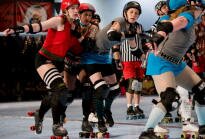 The Rose City Rollers are women of attitude, athleticism and passion playing a hard-hitting sport of speed and skill. They were pioneers in the rebirth of roller derby and continue to foster its growth. Their goals are to serve their community by empowering women, providing entertainment for their fans and supporting charitable causes. They are a non-profit formed in 2004, and a founding member of the Women's Flat Track Derby Association. The Rose City Rollers are women of attitude, athleticism and passion playing a hard-hitting sport of speed and skill. They were pioneers in the rebirth of roller derby and continue to foster its growth. Their goals are to serve their community by empowering women, providing entertainment for their fans and supporting charitable causes. They are a non-profit formed in 2004, and a founding member of the Women's Flat Track Derby Association.
Track and Field is Oregon's sport as many track and field athletics through out the world train in Eugene which bills its self as Track Town USA. The university hosts many prominent track and field events at Hayward Field including the Olympic trials in 2008 and they will also host them again in 2012. The restless soul of Oregon resided in Steve Prefontaine (nicknamed Pre). Born and raised in Coos Bay, Oregon, Prefontaine was a long-distance runner who once held the American record in the five distance track events from the 2000 meters to the 10,000 meters. He is known for his extremely aggressive "front-running" racing style insisting on going out hard and not relinquishing leads, a tactic that his fans and fellow competitors admired. On May 30, 1975, returning from a party and after dropping off friend and distance champion Frank Shorter, Prefontaine was driving down Skyline Boulevard, east of the University of Oregon campus near Hendricks Park, when he swerved his 1973 MGB convertible left to avoid crashing into an oncoming car and hit a rock wall along the side of the street. The overturned car trapped Prefontaine underneath it and he died due to the weight of the vehicle. An annual track event, the Pre Classic, draws thousands of fans every year.
 Basketball for seniors: 60+ on Tuesdays/Thursdays and 50+ on Monday/Wednesday/Friday − Want some fun and exercise? Join the 60+ basketball games on Tuesdays and Thursdays at the Salvation Army gym at 5325 N. Williams in Portland or the 50+ on Mondays/Wednesdays/Fridays. Skill level is not important but attitude is as the idea is to have some fun and get some exercise. What to bring: typical basketball gear plus a dark top and a white top. If you want to use the Salvation Army showers, bring your own towel. Directions: From I-5 take the Killingsworth exit (303) and turn right onto N. Alberta at the exit ramp - go approximately 0.6 miles and take a left onto N. Williams. Go 0.2 miles and the parking lot is on the left just before the traffic light on N. Killingsworth. Time: 11:30 A.M. during the summer months and at noon the rest of the year. Come early if you want to warm up. Cost: $2 drop-in fee or $95 for yearly membership. Call 503-493-3926 if you have questions. Map... Basketball for seniors: 60+ on Tuesdays/Thursdays and 50+ on Monday/Wednesday/Friday − Want some fun and exercise? Join the 60+ basketball games on Tuesdays and Thursdays at the Salvation Army gym at 5325 N. Williams in Portland or the 50+ on Mondays/Wednesdays/Fridays. Skill level is not important but attitude is as the idea is to have some fun and get some exercise. What to bring: typical basketball gear plus a dark top and a white top. If you want to use the Salvation Army showers, bring your own towel. Directions: From I-5 take the Killingsworth exit (303) and turn right onto N. Alberta at the exit ramp - go approximately 0.6 miles and take a left onto N. Williams. Go 0.2 miles and the parking lot is on the left just before the traffic light on N. Killingsworth. Time: 11:30 A.M. during the summer months and at noon the rest of the year. Come early if you want to warm up. Cost: $2 drop-in fee or $95 for yearly membership. Call 503-493-3926 if you have questions. Map...
Keep Portland Weird?
 Driving around Portland, you will notice bumper stickers that say, "Keep Portland Weird.". The bumper stickers that started to appear in 2004 seem to suggest that Portland is uniquely and unquestionably weird among American cities. That we became that way. That we always were that way. That we are weird. Driving around Portland, you will notice bumper stickers that say, "Keep Portland Weird.". The bumper stickers that started to appear in 2004 seem to suggest that Portland is uniquely and unquestionably weird among American cities. That we became that way. That we always were that way. That we are weird.
Terry Currier, owner of Music Millennium on East Burnside Street, says he got the idea for the Weird bumper stickers from a friend in Austin, Texas who said the bumper stickers were designed to get people to support local independent businesses, which Currier says leads to a more diverse and unique city landscape.
Still, when Currier brought the bumper stickers to Portland, his intent had more to do with commerce than quirky. In fact, Currier originally made 500 bumper stickers that read, “Keep Portland Weird, Support Local Business.” They didn’t sell. “The thing with ‘Keep Portland Weird’ is, it is open to interpretation,” Currier says. People have bought more than 18,000 of them from Music Millennium, at $2 a bumper sticker. In Austin, they gave them away.
The Church of Elvis personifies the local motto: Keep Portland Weird. Stephanie Pierce, self-proclaimed celebrity spokes model and artist to the stars, has had four different Church of Elvis art galleries since the mid-1980s, when she first put her idea into action. The current church is located in Chinatown at NW Couch Street near 4th Avenue. The Church of Elvis is in a window, about six feet long and seven feet high, in a building on Couch. Its main attraction, two computers from 1985, have been used since Pierce's first gallery. The computers are at opposite ends of the window, and they are surrounded by hundreds of plastic beads, a few Barbie dolls, wedding cake decorative pieces, plastic heads and much more to entertain pedestrians on the sidewalk. For a mere quarter, a coin-operated machine performs the cheapest wedding ceremony Pierce offers, with the computer conducting the ceremony.
In a 2009 article in the Portland Tribune, Carl Abbott, the Portland State University urban historian says it takes more than a bumper sticker to bend reality. “Except for a handful of 24-year-olds who ride funny looking bicycles, I don’t think Portland is weird at all,” Abbott says. “I’d call it sincere, earnest, outdoorsy, old-fashioned, and pleasant. If Portland were a person, you’d be delighted if your daughter said she planned to marry it.” Here are a couple of other quotes from the article:
-
“Portland is weird in a very sweet way,” says Becky Ohlsen, sometime Portland resident who co-wrote Lonely Planet’s guide to the Pacific Northwest. Some of Ohlsen’s weird Portland favorites include the Sang-Froid Riding Club (the riding takes place on motorcycles), and the local adult soapbox derby.
-
If a city’s spirit is revealed by its architecture, Portland’s spirit is decidedly un-strange, according to Jonah Cohen, managing principal architect of the downtown firm THA architecture. “It’s conservative, actually,” Cohen says. Cohen is hard-pressed to name one Portland building that might be considered avant garde.
Oregonians and Religion Preferences
One of the first things you hear as a new citizen of Portland is that Oregonians don't attend church like people in other parts of the U.S. A study by the American Religious Identification Survey released in March of 2008 updates a chapter in the Oregon biography that is as constant as rain: Oregon is one of the most 'unchurched' state in the nation.
Although Oregon has been the number one "unchurched" state in previous surveys, the 2008 results showed that some New England states have surged ahead of us. Vermont leads the nation with 34 percent of its population replying "none" when asked about their religious identification. New Hampshire comes in second with 29 percent. Oregon's none's account for 24 percent of the population in 2008 and Washington none's were 25 percent. Idaho none's were 23 percent. Nationally, none's are 15 percent of the population.
Oregon has always ranked low in religious affiliation. In 1890, before the U.S. Census stopped asking such questions, just 22 percent of Oregonians told the government they attended church.
Through the years, scholars have offered several theories for the Northwest's regional difference; a cultural emphasis on independence, less interest in connecting to religious institutions and the beauty of the landscape. They also argued that being "unchurched" didn't mean that none's weren't interested in spirituality. I've heard hikers comment that they attend church every Sunday in 'God's Outdoor Cathedral.'
Perhaps Oregonians are changing. A study released in late 2009 ranks Oregon 40th among the states when it comes to the significance of religion in people's lives. The state-by-state Religious Commitment Analysis from the Pew Forum on Religion and Public Life found that 46 percent of Oregonians said religion was "very important in their lives," while 63 percent believe in God "with absolute certainty." According to the study almost a third of Oregonians (32 percent) said they attend religious services at least once a week; 48 percent said they pray at least once a day
Portland Has it Own Brand of Christianity
In Portland and nationally, a new breed of churches often labeled "emergent" is carving out an alternative to the suburban megachurch. For example, there's Imago Dei, founded by an ex-college football player named Rick McKinley. His church, which has gone from meeting in his living room to holding multiple services at a school, emphasizes art, music and social activism. Like many emergent churches, it draws a young, hipster-flavored crowd. Another popular emergent church is led by Bob Hyatt, the 35-year-old pastor of the Evergreen Community. Read more about the Emergent Church.
The movement's unofficial leader is Portland author Donald Miller. Miller is an oddity among Christian authors. Most Evangelists Christians don't care for him one bit. His fans, however, love him. Since 2003, Miller's memoir Blue Like Jazz has sold 150,000 copies and his latest book, Searching for God Knows What is selling well. As reported in the Willamette Week on February 2, 2005, "Miller is a Portland writer to the core. His nonfiction, first-person stories take place in this city's taverns, cafes, streets, parks and colleges. His moody, meandering style is pitch-perfect young Rose City bohemian prose. His cast of characters draws heavily on Portland's deep pool of oddballs."
Donald Miller is part of a loose network of evangelical thinkers and writers who are trying, in fact, is to make the Rose City the hub of a national network of unconventional Christian writers, which he's calling the Burnside Writers Collective. There's Chris Seay, author of books called The Gospel According to Tony Soprano and The Tao of Enron; McKinley, pastor of Miller's own congregation, Imago Dei, published Jesus in the Margins: Finding God in the Places We Ignore in early 2005. Christian publishing is, by some estimates, the fastest-growing segment of the book industry. According to the Association of American Publishers, sales of religious titles jumped 37 percent in 2003 and increased again in 2004.
Oregonians and Free Speech
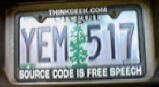 Oregon is where speech is freer than anywhere else in the nation − or for that matter, perhaps the world. Written in 1857, Oregon's free-speech guarantee in an article of the state constitution. It reads: "No law shall be passed restraining the free expression of opinion, or restricting the right to speak, write, or print freely on any subject whatever; but every person shall be responsible for the abuse of this right." Oregon is where speech is freer than anywhere else in the nation − or for that matter, perhaps the world. Written in 1857, Oregon's free-speech guarantee in an article of the state constitution. It reads: "No law shall be passed restraining the free expression of opinion, or restricting the right to speak, write, or print freely on any subject whatever; but every person shall be responsible for the abuse of this right."
This language is broader − "any subject whatever" − than the First Amendment. During the 1980s, the Oregon court concluded that Article 18 absolutely forbids government from passing laws directed at the content of what residents express. This jurisprudence has made Oregon's free-speech law the most protective in the nation.
The city known as one of the nation's most livable displays some of the most offensive materials and nude dancing advertisements in the country. We also have many open protests and the state has a high number of strip clubs (2.6 per 100,000 residents). So don't be alarmed if you see offensive ads and displays as it's all about the Oregon constitution and not lax enforcement.
Story of "Pornland" is a Myth
With its reputation for porno because of its constitution, Portland also has another black mark against it. In 2010 the city became a magnet for national media reporting on child sex trafficking. With cameras rolling on 82nd Avenue, Dan Rather dubbed the city "Pornland" in a documentary. "Nightline" declared Portland the "epicenter for child prostitution," and "World News With Diane Sawyer" called the city a "hotbed of sex trafficking."
It had been report that Portland police see an average of two cases of child sex trafficking each week. The problem: It wasn't true. Sgt. Mike Geiger, supervisor of the Portland police sex crimes unit, said police don't track such statistics. So how did Portland get a reputation it doesn't deserve?
It started when Portland joined 28 other cities in the FBI's Innocence Lost stings against child sex trafficking in February 2009. Portland was participating for the first time, so when police found seven underage prostitutes, it caught the media's attention. The story proved too good to pass up, and it goes something like this: This picturesque city's rampant strip clubs and permissive attitude toward sex allow wide-eyed suburban girls to be swept into prostitution. Portland's location on the Interstate 5 corridor makes it a prime location to move girls up and down the West Coast. Fuzzy data and definitions − lumping under the "trafficked" label not only girls forced into the trade and moved place to place but runaways who sell sex on their own − fueled the frenzy.
But neither the federal government nor the state of Oregon track child sex trafficking or prostitution. Multnomah County and Portland police don't either. The only local data come from the state Department of Human Services, which tallies Multnomah County youths whom someone reported as being involved in sex for sale.
Another FBI sting in October 2009 produced four girls in Portland. But the storyline stuck, in part because advocates pushed it to draw money and support to their cause. National media arrived, and politicians clamored to do something. Local officials even used it to their advantage in order to secure some federal money. Multnomah County cited the first sting and the city's sex industry to land one of three $500,000 federal grants to fight the commercial sexual exploitation of minors, including setting up a system to track cases. In its application, the county said it's "particularly attractive to traffickers," leading to a "particularly high prevalence of sexual exploitation of children."
In summary, it is a horrible problem that lots of cities share, and Portland is no worse or better than others.
Source: "Analysis: Despite reputation, no proof Portland is a hub for child sex trafficking," by Nikole Hannah-Jones, The Oregonian, January 14, 2011.
Portland Metro Area Politics
 How liberal is Portland? Very if you consider presidential elections. The first President Bush called Portland "Little Beirut" for the hostile receptions he could rely on, and his son hasn't fared any better. In the presidential elections of 2004, Bush received just 27.28% of the votes in Multnomah County where Portland is located and John Kerry received 71.92% of the votes. You can see from these statistics that Portland has been called "The People's Republic of Portland." As you proceed east in Multnomah County, Bush did better and even won some precincts. In Clackamas County, an area of suburban communities (e.g., Lake Oswego, West Linn, etc.) just south/southwest of Portland, Bush won with 50.46% of the votes. How liberal is Portland? Very if you consider presidential elections. The first President Bush called Portland "Little Beirut" for the hostile receptions he could rely on, and his son hasn't fared any better. In the presidential elections of 2004, Bush received just 27.28% of the votes in Multnomah County where Portland is located and John Kerry received 71.92% of the votes. You can see from these statistics that Portland has been called "The People's Republic of Portland." As you proceed east in Multnomah County, Bush did better and even won some precincts. In Clackamas County, an area of suburban communities (e.g., Lake Oswego, West Linn, etc.) just south/southwest of Portland, Bush won with 50.46% of the votes.
In the 2008 presidential election, Obama got 54% and McCain 44%. In the 2004 presidential election in Washington County (e.g., Beaverton, Hillsboro, etc.), Kerry won by 52.48% - Bush received 46.66%. In 2008, Barrack Obama won by over 20 percentage points in Washington County − he received 60% of the vote and McCain got 38%.
2008 Presidential Election - Multnomah County
-
Barack Obama (DEM): 76.65%
-
John McCain (REP): 20.66%
-
Bob Barr (LIB): .33%
-
Chuck Baldwin (CON): .25%
-
Cynthia McKinney (PAC): .33%
-
Ralph Nader: 1.14%
On some issues, the Portland metro area votes more like a block. When Oregon had its vote on anti-gay legislation, the Portland area rose in opposition against it, and outweighed the predominantly conservative rural areas of Oregon that voted in favor of it. In 2000, Measure 9 (prohibited public school instruction encouraging, promoting, sanctioning homosexual, bisexual behaviors) was defeated 55%-45%, with much of the 55% from the Portland metro area.
Statewide Oregon is more of a blue state than a red state and it appears that it is getting bluer with each election. By a fraction of a percent in the presidential election in 2000 and in 2004 by a 1.5 percent points (Kerry got 51.54% and Bush 47.49%). In 2008, Obama got 57% of the vote while McCain got 41%.
Oregon's U.S. Senators are both Democrats (Ron Wyden and Jeff Merkley). Merkley defeated Gordon Smith in the 2008 election - he received 49% of the vote and Smith received 46%. Of the five members in the US House of Representatives, four are Democrats.
Voter registration in Oregon: 936,735 Democrats to 697,309 Republicans along with 433,959 Independents. By election time in 2008, Democrats outnumbered Republicans statewide by nearly 240,000 voters.
Pick a Portland Neighborhood Based on the 2008 Election Results
-
Go to the Multnomah County Election Results & History page.
-
Under the "2008 General Election" banner, click on November 4, 2008 General Election.
-
Under the "Abstracts - Results by Precinct" banner click on the Abstracts (results by precinct). This file "November 2008 General Election Abstracts (Results by Precinct)" will display the voting numbers (by precinct) for the USA President as well as other offices. You may want to print some pages on this file as you will have to match the voting by precincts with a map of the precincts.
-
Go to the Election Maps page and under the "Multnomah County Precinct Maps" banner click on the Precinct Overview Map (PDF).
-
Locate the precincts on the Portland Neighborhood Map.
State Offices and State Legislature
Oregon House members must run for re-election every two years. Senators serve four-year terms, with half the Senate appearing on the ballot every two years. A party needs at least 31 seats in the House and 16 in the Senate to control both chambers. The state legislature has been controlled by Republicans in the 90s and early 2000s. In 2004, the Democrats took over the senate by a couple of votes and held control by two senators in the 2008 election. House Democrats, who had a 31-29 edge over minority Republicans, picked up six more seats in the 2008 election.
In 2008, all of the state office holders are Democrats.
Portland Voter Never Met a Tax They Didn't Like
In the 1960s, voters turned down two-thirds of the tax measures the city put on the ballot. Over time, the ratio has reversed. In the past 10 years, voters said 'yes' to 13 out of 22 tax measures in Portland. Three of the nine measures that failed fell victim to voter turnouts of less than 50 percent (though all three subsequently passed in November elections when the turnout rule didn't apply). And Portland voters said yes to light-rail bonds in 1998, but the measure failed when more voters in Washington and Clackamas County said no.
In 2008, Portland voter approved tax increases for the zoo, Portland Community College and city children's programs despite a struggling economy.
Elections Division
The Oregon Elections Division has a comprehensive Web site about Oregon elections at http://www.sos.state.or.us/electionss.
Oregon Vote by Mail
The Oregon Legislature approved mail voting as an option for local elections in 1981. In November 1998, Oregon voters overwhelmingly approved Measure 60, making it the first and only state to go to a complete mail-voting system. Like Oregon Death with Dignity Law, the Vote by Mail statue has been challenged and the law upheld. Read more about Oregon's Vote by Mail law on the Secretary of State's Web site.
Other Information
The Bay Area Center for Voting Research released a study in the Summer of 2005 and ranked metro areas as liberal or conservative. Portland "Liberal Rank" was 29 and its "Conservative Rank" 208. The report said that Portland's "Liberal % of Total Vote" was 76.04 percent (Conservative was 23.96%).
The metro area has its share of conservative talk show hosts, the most popular one is nationally syndicated Lars Larsonson. The Lars Larson Show can be heard on KXL radio station - 750 on the AM dial. Lars' counterpart on the print side is The Oregonian conservative columnist David Reinhard.
The Creative People of the Portland Metro Area
The Young and the Restless Scholars have increasingly highlighted the economic importance of talented workers, the people Richard Florida calls the "Creative Class." These writers, designers, engineers, architects, researchers and others create the ideas that drive business success and regional progress. They're the "Young and the Restless," a powerhouse of creative and talented 25- to 34-year-olds settling in the Portland area at five times the national rate. Metropolitan Portland ranked eighth among the top 50 U.S. metro areas in population growth in this age group; it was fourth in the growth of college-educated 25- to-34-year-olds, with a 50 percent gain. Portland gained young people from 43 of the 50 largest metropolitan areas in the nation.
Read the Young and the Restless: How Portland Competes for Talent report. Research for the report was undertaken by Impresa, Inc. and Coletta & Company on behalf of Portland Development Commission, Westside Economic Alliance, City of Beaverton, City of Hillsboro, City of Tualatin, and Nike.
Greenlight Greater Portland, a privately funded economic development group, issued a "prosperity index" in early June 2008 that compared the metro area with nine other Western cities and touted its robust economic prospects over the next five years. Richard Florida was present at the release of the report. Greenlight's report follows in Florida's footsteps, comparing business, demographic and quality-of-life in Portland to those of nine other hot metropolitan areas in the West, including Seattle, San Francisco, Denver and Austin, Texas. Greenlight predicts that Portland's economy will expand 29 percent by 2013, outpacing all but Austin's growth during the period.
Science Lectures Draw Inquiring and Thirsty Minds
Recent college grads, retirees and working folks stream into the Mission Theater and fill their tables with pizza, burgers and pitchers of beer. The topic of the night is engineering. More than 200 people gather monthly at "science pubs" in Portland to talk about everything from the physics of fun to volcanology, from nanotechnology to engineering solutions for water shortages in developing countries.
When: Last Tuesday of the month from 7 p.m. to 9 p.m. at the Mission Theater at 1624 N.W. Glisan. Doors open at 5 p.m. Suggested cover charge: $2. More information: OMSI Science.
Business and Economic Information
Oregon has just two Fortune 500 companies − Nike and Precision Castparts. The majority of Portland businesses are small to midsized, meaning they employ less than 500 people. Portland doesn't have Seattle's business mite − no Boeing and the high-tech wealth of Microsoft and other software companies.
Portland ranks number 21 in total manufacturing employment, though the number of manufacturing plants and industrial jobs statewide declined in 2010. According to data compiled by Manufacturers News Inc., which publishes industrial trade directories in every U.S. state, Portland had 46,787 industrial jobs as of December 2010. Houston topped the list with 228,226 jobs, followed by New York, Chicago, Los Angeles and St. Louis. Overall, the nation's top-10 industrial cities have lost 95,805 manufacturing jobs, or 8.4 percent, since the publisher's last job tally in 2008.
For many year, Oregon had a large wood products business but that industry has diminished over the years. Twenty years ago, only a handful of Oregon companies employed large numbers of manufacturing workers. Instead, Oregon became a destination for an earlier generation of manufacturers from California and Japan who were looking for cheap places to produce their wares. Drawn by Oregon's proximity to the Silicon Valley and the Pacific Rim, and by a package of legislative incentives that exempted most of their equipment from property taxes, Intel and other manufacturers launched a building boom in the 1990s, concentrated in Washington County.
Intel employs about 15,000 in the metro area and there are numerous other semiconductor companies in the area. No one has built a new semiconductor plant in Oregon since 2004 but Intel announced in 2010 that they plan to do so at their base in Hillsboro. The chip industry has largely shifted overseas and Oregon has lost a third of all its high-tech manufacturing jobs since the industry's peak early in 2001 − it lost 16,000 technology manufacturing jobs since 2001. As economic growth accelerated in Asia, though, developing countries lured manufacturers away from the U.S. with even better deals. New factories that might have added jobs in Oregon went overseas instead.
That's not what state officials had hoped a decade ago, when Oregon hoped jobs in semiconductor would pave the path to the future. Big tax breaks opened the door to a spate of billion-dollar factories that added tens of thousands of jobs and began transforming the state's image and economy. Intel, Oregon's largest technology manufacturer, spent billions in 2009 to upgrade one of its aging research factories in Hillsboro, giving the facility a central role in the company's nascent push into mobile technology. The company is positioned to build another multibillion-dollar factory in Oregon sometime in the next decade, though it has made no commitments and is uncertain about the timing.
The new industry is solar. Some solar companies have taken over the chip plants as this industry is growing and retrofitting a chip plant to solar panel is relatively inexpensive. For example in 2007, SolarWorld AG, a German company took over a semiconductor plant in Hillsboro from the Japanese Komatsu Group for $40 million. SolarWorld AG established an integrated solar silicon wafer and solar cell production facility in Hillsboro. It may become the largest solar factory in North America when the plant reaches its projected capacity of 500 megawatts (MW).
Many solar companies are building new plants. In early 2010, German manufacturer Centrosolar announced tentative plans to build a plant in Gresham. In October of 2009, a Chinese solar component manufacturer called Oregon Crystal Technologies also announced plans to find a new home there. Ferrotec, a Japanese company with U.S. headquarters in New Hampshire, announced plans to built a plant in Fairview. Ferrotec manufactures components typically used in the production of monocrystalline wafers, the type currently made by companies such as SolarWorld.
Many services-based ecosystem have bloomed in the last few years: micro breweries, restaurants, bike shops, advertising agencies and apparel firms. It's a business ecology that prizes progressive social values and livability, not raw wealth and power.
A good example of taking this business ecology one step further into actual manufacturing is United Streetcar, LLC (a subsidiary of Oregon Iron Works, Inc.). United Streetcar and SKODA have partnered to produce modern, efficient, American-manufactured streetcars and to be a pioneering force in increasing urban transit options throughout the United States. In 2009, United Streetcar completed manufacturing the first Buy-America compliant modern streetcar for the City of Portland, Oregon. These cars will be on the streets of Portland in 2010. Many other cities in the USA have expressed an interest in purchasing United streetcars.
-
Portland is home to the largest independent bookstore in the world, Powell's City of Books.
-
Largest employers in the metro area: Intel (14,000-16,000), Fred Meyer, Providence Health System, Oregon Health Sciences University, Legacy Health System, Freightliner, and Nike.
-
Port of Portland The Port is an 800-employee operation with more than $1.6 billion in marine and aviation transportation infrastructure and real estate assets that generates nearly $250 million in annual revenues. The Portland harbor exports the largest volume of wheat in the United States and the Columbia River is the third largest grain exporting center in the world.
-
Saturday Market is one of the largest open air craft markets operating continuously in the country.
-
No pennies needed. Oregon does not have a sales tax.
-
No pumping your own gas. Oregon is one of two states that does not permit self service stations. New Jersey is the other.
-
Portland Business Journal An online source of business news for Portland.
-
Portland Development Commission PDC's "Publications" section on their Web site has online demographic information in four categories (General, Development, Economic Development, and Housing).
-
Portland's Consumer Price Indexex All Urban Consumers (CPI-U) was 194.5 (1982-84=100) during the first half of 2005. This means a market basket of goods and services that cost $100.00 in 1982-84 would have cost $194.50 during the first six months of 2005. Local area CPI data are not seasonally adjusted.
-
Regional Business The federal government ranks the Portland-Vancouver area as the nation’s 25th largest metropolitan area. It has a population of roughly 2 million people, of whom more than 1 million are employed. The gross metropolitan product — the total value of all goods and services produced in the region — is about $80 billion a year. Total output in the region expanded from $38.7 billion in 1992 to $76.9 billion in 2002, an annual increase of 7.1 percent per year over the decade, making it the 10th fastest growing of the nation’s 50 largest metropolitan areas.
Portland Metro Area Demographics
Portland, the whitest major city in the country, has become whiter at its core even as surrounding areas have grown more diverse according to figures from the 2010 census. The Oregonian did an analysis of the shifts in Portland's population on May 1, 2011 in an article entitled, "In Portland's heart, 2010 Census shows diversity dwindling." Below are some of the findings.
Of 354 census tracts in Multnomah, Washington and Clackamas counties, 40 became whiter from 2000 to 2010, according to The Oregonian's analysis of the 2010 Census. Of those, two lie in rural Clackamas County. The 38 others are in Portland.
The city core didn't become whiter just because white residents moved in, the data show. Nearly 10,000 people of color, mostly African Americans, also moved out. Pushed out by gentrification, most settled on the city's eastern edges, according to the census data, where the sidewalks, grocery stores and parks grow sparse, and access to public transit is limited. As a result, the part of Portland famous for its livability − for charming shops and easy transit, walkable streets and abundant bike paths − increasingly belongs to affluent whites.
Overall, Oregon saw significant gains in communities of color, particularly with 64 percent growth for Latinos and 40 percent for Asians. Statewide, the nonwhite population climbed from 16 percent in 2000 to 22 percent in 2010. Portland as a whole grew more diverse, too, with its nonwhite population increasing from 25 percent to 28 percent. Still, the city showed small gains in diversity compared with most big U.S. cities and solidified its position as the nation's whitest.
For the first time, Multnomah County, dominated by Portland, took a back seat to Washington County as the state's most diverse. On the city's inner east side, however, most census tracts became whiter, even those already overwhelmingly white.
Tracts along Southeast Stark Street, for example, climbed from 78 percent white to 82 percent, or 80 percent to 85 percent. Inner North and Northeast witnessed the most striking transformation. The area bounded by the Willamette River, North Greeley Avenue, Northeast Columbia Boulevard, Northeast 42nd Avenue and Interstate 84 lost about 8,400 people of color, including 7,700 African Americans, or a loss of one in four compared with the population in 2000. Today, about 29,900 people of color remain in a total population of 105,500.
To view data from the U.S. Census for the Portland metro area visit the Portland State University Population Research Center. Below are the numbers from the 2010 census for Portland as well as the metro area:
-
Population 1,572,771 million people live in the Portland Metro area (Multnomah Country which includes most of the City of Portland), Clackamas County (southeast), Washington County (west), and Clark Country (Vancouver area of Washington state).
-
Portland Population 583,766 - a gain of 10.3% from 2000 numbers.
-
Same-Sex Couples Living in Portland In Portland, same-sex couples make up two percent of households according to the 2010 census. And about 60 percent of the state's gay and lesbian couples reside in the metro area. The number of Oregonians who reported living in same-sex couple households increased nearly 68 percent from 2000 to 2010, from about 8,900 to 14,980.
-
Persons per Square Mile 4,375.3.
-
Age 19.1% under the age of 18 and 80.9% are 18 and older.
-
Race 72.2% white, 9.4% Hispanic, 6.1% black, 0.8% American Indian and Alaska Native, 7.1% Asian, 0.5% Native Hawaiian and other Pacific Islander, 0.2% some other race, 3.7% are two or more races.
-
Housing 265,439 housing units in Portland. 93.6% are occupied and 6.4% are vacant or seasonal.
Oregon
-
Oregon Population 3,844,195 live in Oregon as of July 1, 2010. This represents a 12% gain from the 2000 census.
-
Households 614,568 total households. 63.7% of the households are family households and 36.3% are nonfamily households. 49.8% are married couples with a family and 9.8% are female householder with no husband present.
-
Race/Ethnicity 80.5% are whites; 2.9% black; 0.9% are American Indian or Alaska Native; 4.9% are Asian, 0.3% are Native Hawaiian and other Pacific Islander, 4.1% are some other race, 3.3% are two or more races. The Hispanic or Latino make up 8% of the total population.
For more details, download the document titled Profile of General Demographic Characteristics: 2000 Geographic Area: Portland--Vancouver, OR--WA PMSA. We will post the 2010 profile when it is available.
With a population of 2.26 million people as of June 2011, the Portland-Vancouver, Wash.-Hillsboro metro area is the 23rd largest metro area in the nation. According to a searchable On Numbers database compiled by the Portland Business Journal, Salem ranked No. 131 nationally with 396,145 people, Eugene-Springfield ranked No. 144 with a population of 354,969, Medford ranked No. 207 with a population of 205,460 and Bend rounded out Oregon's top five population centers with a ranking of 255th and a population of 161,666.
Other Information About Portland
Portland Notables
Visit the page called Kudos to learn the "praises" as well as the "not so good" about Portland and Oregon.
Who Lives in Portland
Click here to view a partial list of Portlanders, people from or with connections to Portland, Oregon; a separate list of people from Oregon is available.
The TV series "Portlandia" wasn't supposed to be making fun of the Rose City but I guess they changed their mind. Here is some dialogue: "Remember when people were content to be unambitious, sleep to 11, just hang out with their friends; when you had no occupations whatsoever; maybe working a couple of hours a week at a coffee shop." "Right, I thought that died out a long time ago." "Not in Portland. Portland is a city where young people go to retire."
Liquids
-
Portland has the highest per capita consumption of gourmet coffee bean in the US according to the New York Times.
-
Portland has more microbreweries per capita than any other city. Portland has a couple of nicknames, "Beervana" and "Brewtopia," to mark its thriving microbrewery industry.
-
462 vineyards in state - 47 wineries within 100 miles of Portland.
We Make Extensive use of the County Library System
-
In 2010, for the eighth year in a row, the Multnomah County Library system recorded the highest circulation in the nation for libraries serving fewer than one million residents. In 2009 and 2010, the Multnomah County Library had the second highest circulation rate in the country. Only New York City circulates more items.
-
The system circulated nearly 23 million items or 31 check-outs or renewals for every man, woman and child in the county in 2010.
-
Multnomah County has the highest collection turnover rate per capita − meaning its books, CDs, DVDs and other materials are checked out at twice the rate of the national average.
-
More than half of the county's residents have a library card − about 431,000 cardholders for about 726,000 people.
Outdoors
-
Skiing at Mt. Hood Timberline is almost a year-around activity. The high-speed Palmer lift begins operations each spring and it whisks skiers close to the summit.
-
Oregon's 363 miles of beaches and dunes are open to the public. You can hike the entire coast except for 42 miles of headwalls (sheer cliffs).
Parks
-
Portland Parks and Recreation Department manages over 200 parks which amounts to 10,763 acres.
-
Forest Park is the 14th largest city park in the USA. Forest Park covers 5,000 plus acres, has 74 miles of trails, and 100 plus bird and animal species.
-
Mill Ends Park with a diameter of only 24 inches, is the world's smallest park.
-
Mt. Tabor, in southeast Portland, is the only extinct volcano within a city in the USA.
Portland History
-
For decades, the basic guide to how Portland got where it is was E. Kimbark MacColl, author of three fundamental books on the creation of this city. MacColl wrote three overlapping volumes tracing the growth of Portland from its origins to the mid-20th century: The Shaping of a City, The Growth of a City and Merchants, Money and Power. The first book appeared in 1976. The author died in 2011 at the age of 86.
|